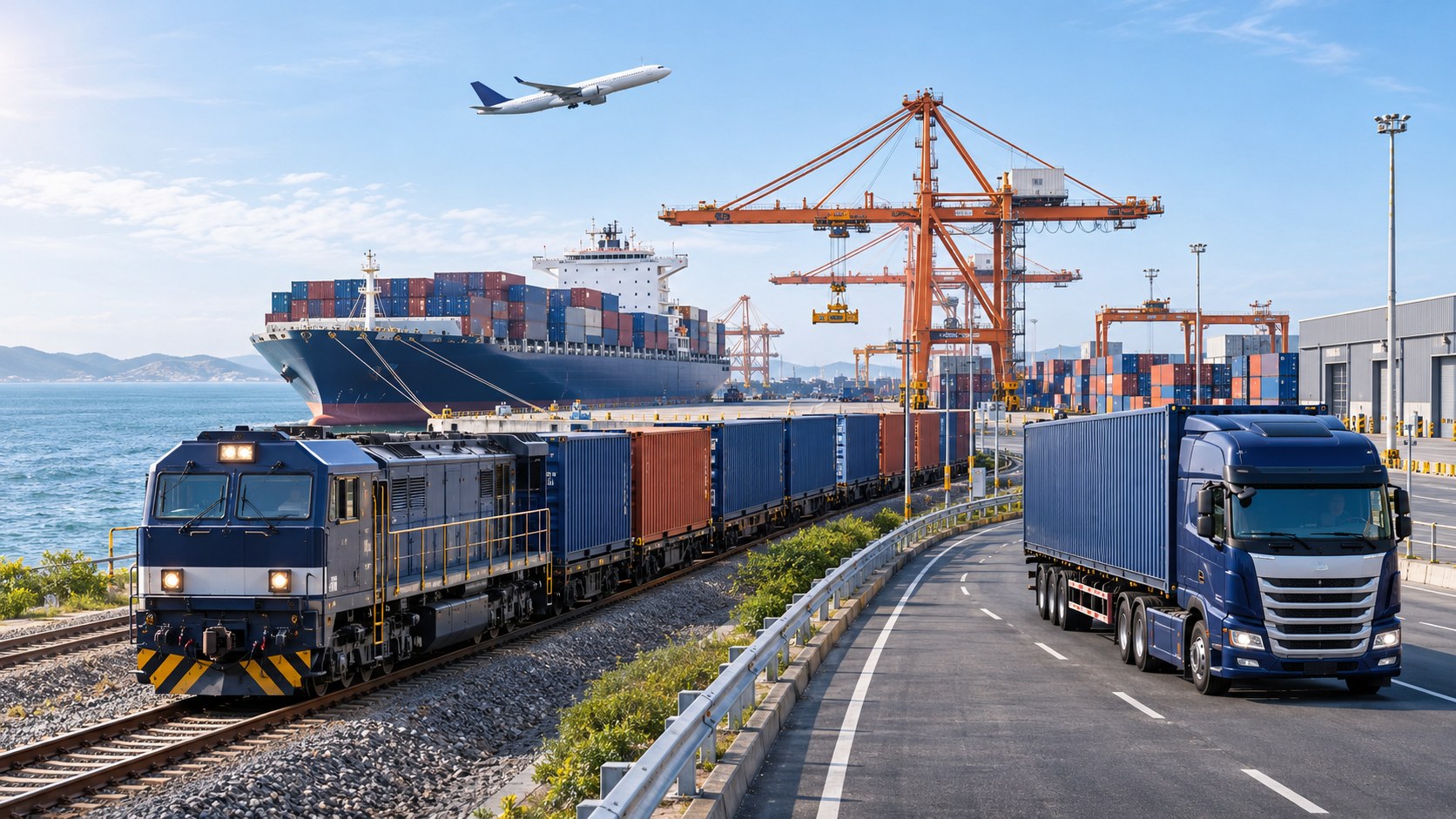
There is no universally best freight mode. One business needs a component before production can restart; another needs planned stock at a sensible delivered cost per unit. Define the cargo's business purpose before choosing the transport.
1. Ask four questions first
When does the consignee genuinely need the goods? What are the packed weight and volume? How much of the product's value can reasonably be spent on freight? Are there batteries, liquids, fragile parts, unusual dimensions or temperature requirements? These answers rule out unsuitable options before rates are compared. Density matters too: a large lightweight box can occupy substantial chargeable space.
2. Air freight when speed justifies the expense
Consider air for pre-order samples, small urgent batches, valuable components and spare parts that keep equipment running. It may make more sense to fly one essential item than to expedite an entire purchase. Quotations take actual and volumetric weight into account under the carrier's rules. Special cargo needs acceptance checks in advance: urgency alone does not make it suitable for air transport.
3. Sea freight for planned and bulky shipments
Sea routes can suit furniture, machinery, building materials, household products and regular stock replenishment where procurement allows adequate time. Compare the whole chain, including terminal handling and inland delivery after arrival. LCL can be considered for a part-container shipment, while FCL provides a dedicated container.
4. Rail for regular commercial consignments
Assess rail where the objective is a balance rather than maximum urgency or the lowest freight charge alone. Typical candidates include components, equipment, textiles, retail goods and production materials. Actual timing and cost depend on the available route, terminals and schedules. China–Georgia services may be multimodal, with other transport used for individual legs. Check the journey through to the consignee, rather than the rail segment in isolation.
5. Road freight from China to Georgia
Road freight from China to Georgia is an option for machinery, spare parts, retail goods and other commercial cargo. We arrange both consolidated consignments and dedicated truck shipments. The route and delivery arrangements are selected around the cargo's volume, weight and characteristics, with timing and cost calculated for each shipment.
6. LCL versus FCL: assess the space you need
LCL shares a container with other shippers; Silver Fox Logistics considers consolidated cargo from 1 m³. FCL provides a dedicated container without requiring it to be completely full. The decision depends on weight, cargo properties, compatibility, handling and total charges as well as volume. There is no universal volume threshold at which FCL is always cheaper: compare both quotations for the same consignment.
7. Combine modes where the business case supports it
Consider flying an urgent part of an order while the main volume follows a planned route. Allow time for seasonal stock, evaluate packaging and handling for fragile cargo, and obtain separate acceptance checks for oversized or dangerous goods. Send Silver Fox Logistics the product description, packed weight and dimensions, addresses, ready date and target delivery date. We help compare available options and assess which level of speed makes sense for your shipment.